
Conquering Vietnam's four extreme points — North, South, East, and West — is a travel dream for many Vietnamese. From the majestic Lung Cu Flagpole amidst the clouds of Ha Giang, through the A Pa Chai tri-border area where "one rooster's crow is heard in three countries," to Mui Doi where waves crash at the easternmost edge, and the southernmost point of the Fatherland at Mui Ca Mau — where the mainland merges with the sea. This article compiles comprehensive information about all four extreme points, along with suggestions for nearby destinations worth visiting on each journey.
Northernmost
Lung Cu
Ha Giang
Easternmost
Mui Doi
Khanh Hoa
Westernmost
A Pa Chai
Dien Bien
Southernmost
Mui Ca Mau
Ca Mau
1. Northernmost Point — Lung Cu, Ha Giang
The Lung Cu Flagpole is located in Lung Cu commune, Dong Van district, Ha Giang province — the northernmost point of mainland Vietnam, atop Dragon Mountain at an altitude of 1,700m above sea level. The 54m² red flag with a yellow star fluttering in the sky is a sacred symbol of sovereignty, where every Vietnamese person who sets foot feels a surge of emotion.
Travel to Lung Cu usually starts from Hanoi along the route: Hanoi → Ha Giang city (about 4–5 hours by car) → Dong Van (another 3–4 hours via treacherous passes) → Lung Cu (another 30 minutes). The entire one-way journey from Hanoi takes about 8–9 hours, so it's often divided into 2–3 days.
Nearby Must-Visit Spots
- Ma Pi Leng Pass — one of Vietnam's "four great mountain passes," with the most magnificent scenery
- Dong Van Old Quarter — ancient stone architecture, market held every Sunday
- Dong Van Karst Plateau Geopark — UNESCO Geopark, unique limestone terrain
- Meo Vac & Nho Que River — kayaking beneath towering cliffs
Best time to visit: October–November (buckwheat flower season) or March–April (peach and plum blossoms, cool weather). Avoid the rainy season from June–August due to slippery mountain roads and thick fog.
2. Easternmost Point — Mui Doi, Khanh Hoa
The easternmost point of mainland Vietnam is Mui Doi, located on Hon Goc peninsula, Van Thanh commune, Van Ninh district, Khanh Hoa province. This is the first place on mainland Vietnam to welcome the sunrise each morning — a meaningful detail that makes the sunrise experience here more special than anywhere else in the country.
Unlike the other three extreme points, Mui Doi does not have a road directly to it — visitors must take a boat from Dam Mon pier (Van Ninh district) or hike along a coastal trail. This is what makes the easternmost point the most challenging of the four to conquer, suitable for those who love wild exploration.
Nearby Must-Visit Spots
- Nha Trang — bustling coastal city, about 60km from Van Ninh, with resorts and seafood cuisine
- Dalat — the city of a thousand flowers, about 130km from Nha Trang via Khanh Le Pass, with a cool climate of 18–22°C year-round, ideal for combining in a South Central Coast trip
- Van Phong Bay — one of the most beautiful bays in Southeast Asia, very close to Van Ninh
- Diep Son Island — unique walking path in the middle of the sea, 30 minutes by boat from Van Ninh
Best time to visit: January–August, calm seas, beautiful sunshine. Avoid September–December as this region often experiences storms and heavy rain.
3. Westernmost Point — A Pa Chai, Dien Bien
The westernmost point of Vietnam is A Pa Chai, located in Sin Thau commune, Muong Nhe district, Dien Bien province. This is the tri-border area of Vietnam – Laos – China, where folklore says "one rooster's crow is heard in three countries." Milestone 0 is placed at the intersection of the three borders, creating a unique geographical symbol.
The journey to A Pa Chai is the most challenging of the four extreme points: from Hanoi, fly or take a bus to Dien Bien Phu City (~470km), then continue ~170km on mountain roads to Muong Nhe, and then walk or hire a motorbike taxi into Ta Mieu village for about 5–7km. The entire journey during the rainy season can be cut off due to muddy roads.
Nearby Must-Visit Spots
- Dien Bien Phu City — historical relics of the Dien Bien Phu Campaign of 1954, A1 cemetery, De Castries bunker
- Muong Thanh Valley — the largest rice field in the Northwest, most beautiful during the ripe rice season in September–October
- Ha Nhi village in Sin Thau — unique indigenous culture little affected by outside influences
- Pa Khoang Lake — beautiful artificial lake 17km from Dien Bien Phu City
Best time to visit: November–April (dry season), roads into the village are not muddy. You need to register for a border area permit at Sin Thau Border Post before entering.
4. Southernmost Point — Mui Ca Mau (Dat Mui)
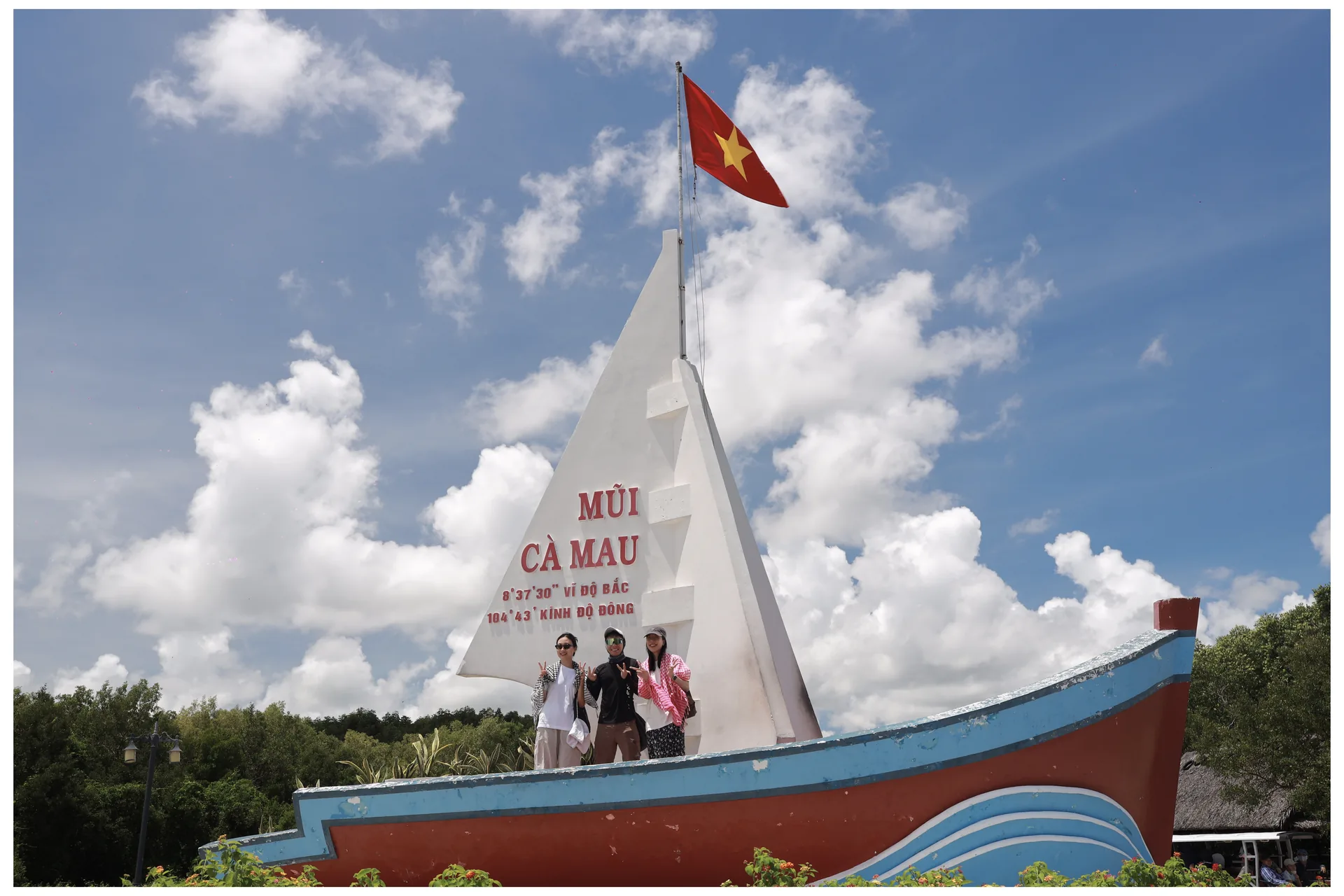
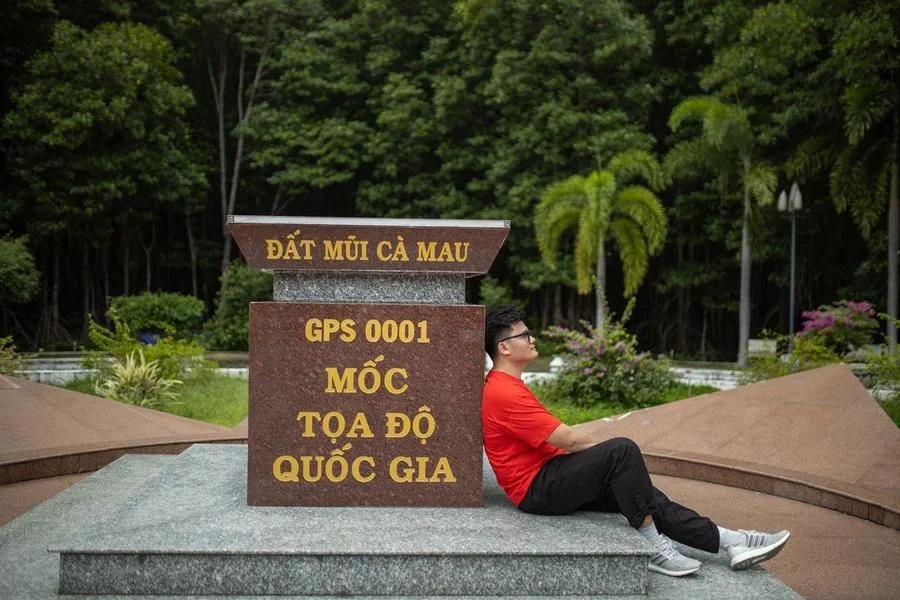
The southernmost point of mainland Vietnam is Mui Ca Mau, located in Dat Mui commune, Ngoc Hien district, Ca Mau province. GPS milestone 0001 placed here is a symbol of the southernmost point of the Fatherland. More special than all other three extreme points: this is the only place in Vietnam where you can watch the sunrise from the East Sea and set into the West Sea on the same day. See tips for visiting Mui Ca Mau to prepare before you go.
The Mui Ca Mau alluvial plain is expanding by 50 to 80 meters each year due to sediment deposited by the Mekong River — meaning the country is still growing daily at this southernmost point. The entire area is surrounded by Mui Ca Mau National Park (total area 41,862 ha), recognized by UNESCO as a World Biosphere Reserve in 2009 and the 2088th Ramsar site in the world (2012).
Journey to Mui Ca Mau (from Ho Chi Minh City)
The experience at Mui Ca Mau is not just about checking in at the milestone. The journey by canoe through the pristine mangrove forest, admiring the expanding alluvial plain, and enjoying Ca Mau's specialty seafood right at Dat Mui — these are memories that cannot be found at any other extreme point in the country.
Nearby Must-Visit Islands — Southern Sea Islands
- 🏝️ Nam Du (Kien Giang) — an archipelago of 21 pristine islands, crystal clear blue water, snorkeling to see coral. From Rach Gia, it takes about 2.5–3 hours by high-speed boat. See Bà Ngoại Homestay's Nam Du tour →
- 🏝️ Hon Son (Kien Giang) — a pristine island with few tourists, Bai Bang beach famous for its emerald green water. Same boat route as Nam Du from Rach Gia.
- 🏝️ Con Dao (Ba Ria – Vung Tau) — a paradise island with some of Vietnam's most beautiful beaches, a sea turtle conservation area, and the moving history of Con Dao Prison. Fly from Ho Chi Minh City or Can Tho in just 45–50 minutes. See Bà Ngoại Homestay's Con Dao tour →
An ideal itinerary for the "Southern extreme region": Ca Mau 2–3 days (Mui Ca Mau + U Minh Ha) → Nam Du or Hon Son 2 days (from Rach Gia) → Con Dao 2–3 days (fly from Ho Chi Minh City or Can Tho). This entire Southern route can be condensed into 7–10 days. Refer to how to travel from HCMC to Ca Mau to save time and costs.
5. Comparing the Four Extreme Points: Where Should You Go First?
| Criteria | Northernmost | Easternmost | Westernmost | Southernmost |
|---|---|---|---|---|
| Accessibility Difficulty | ⭐⭐⭐ | ⭐⭐⭐⭐ | ⭐⭐⭐⭐⭐ | ⭐⭐ |
| Natural Scenery | ⭐⭐⭐⭐⭐ | ⭐⭐⭐⭐ | ⭐⭐⭐⭐ | ⭐⭐⭐⭐⭐ |
| Unique Experience | Ma Pi Leng Pass | Easternmost sunrise | Tri-border area | Mangrove forest + 2 seas |
| Combined Island Trips | None | Diep Son | None | Nam Du, Hon Son, Con Dao |
| Suitable for | Motorbike touring, trekking | Exploration, wilderness | Hardcore touring | All travelers |
6. Suggested Itinerary for Conquering the Four Extreme Points
It's not necessary to visit all four extreme points in one trip. The most common way is to divide it into four trips according to the four seasons of the year, each trip combining an extreme point with nearby attractions:
–Nov
Northernmost — Ha Giang
Lung Cu + Dong Van + Meo Vac + Ma Pi Leng Pass. Buckwheat flower season in full bloom. 5–7 days from Hanoi.
–Mar
Easternmost — Khanh Hoa + Dalat
Mui Doi + Nha Trang + Dalat. Calm seas, beautiful sunshine, Dalat flowers in bloom. 7–10 days from Ho Chi Minh City or Hanoi.
–Apr
Westernmost — Dien Bien
A Pa Chai + Dien Bien Phu City + Muong Thanh Valley. Dry season, convenient access to the village. 5–7 days from Hanoi.
–Apr
Southernmost — Ca Mau + Sea Islands
Mui Ca Mau + U Minh Ha + Nam Du or Hon Son + Con Dao. Dry season, best calm seas. 7–10 days from Ho Chi Minh City.
7. Frequently Asked Questions
What are the four extreme points of Vietnam exactly?
Northernmost: Lung Cu commune, Dong Van district, Ha Giang province. Southernmost: Dat Mui commune, Ngoc Hien district, Ca Mau province. Westernmost: Sin Thau commune, Muong Nhe district, Dien Bien province. Easternmost: Mui Doi, Hon Goc peninsula, Van Thanh commune, Van Ninh district, Khanh Hoa province.
How much does it cost to visit the four extreme points?
Each extreme point has different costs. The Southernmost (Ca Mau) is easily accessible and has all-inclusive tours from 890,000 VND/person. The Northernmost (Ha Giang) by motorbike tour costs about 1,500,000–2,500,000 VND/person/5 days. The Westernmost (A Pa Chai) is the most expensive due to its remote terrain, estimated at 3,000,000–5,000,000 VND/person. The Easternmost (Mui Doi) requires a private boat rental, about 500,000–1,000,000 VND/boat.
Which extreme point is easiest for those not used to touring?
The southernmost point (Mui Ca Mau) is the easiest — with all-inclusive tours, stable roads, and no need for mountain climbing or touring experience. It is suitable for families, children, and seniors. The westernmost point (A Pa Chai) is the most challenging, requiring good physical health and mountain trekking experience.
Can you travel to Nam Du and Con Dao from Ca Mau?
Nam Du and Hon Son depart from Rach Gia (Kien Giang), which is about 130km from Ca Mau City. Con Dao is accessible via a short flight from Ho Chi Minh City or Can Tho. All three destinations can be combined into a 10-day southern itinerary. Bà Ngoại Homestay offers Nam Du + Hon Son and Con Dao tours; contact us for details.
Reference Sources
To ensure absolute accuracy in geographical coordinates and boundaries, the facts in this article have been cited from the following official publications:
- Department of Survey, Mapping and Geoinformation of Vietnam (Ministry of Natural Resources and Environment): Published geographic coordinates of national mainland boundary extreme points.
- Land Border Treaty between the Socialist Republic of Vietnam and the People's Republic of China (signed in 1999) defining the Northernmost (Lung Cu) and Westernmost (A Pa Chai) landmark coordinates.
- National Boundary Commission - Ministry of Foreign Affairs (Vietnam): Official documents validating the administrative coordinates of the country's border frontiers.
- Management Boards of Ca Mau Cape National Park & Chu Mom Ray National Park: Spatial boundaries and official sovereignty landmarks data.
Start From the Southernmost Point — Mui Ca Mau!
The southernmost point is the easiest, most beautiful, and most culturally rich destination. Contact Mr. Bi to book your Mui Ca Mau, Nam Du, Hon Son, or Con Dao tour today!
Related Articles


Written by
Tran Bi (Founder of Ba Ngoai Homestay)
Tran Bi is a local tourism expert with over 10 years of experience guiding visitors through Cape Ca Mau and the U Minh mangrove forests.
Experience Ca Mau Ecotourism Firsthand
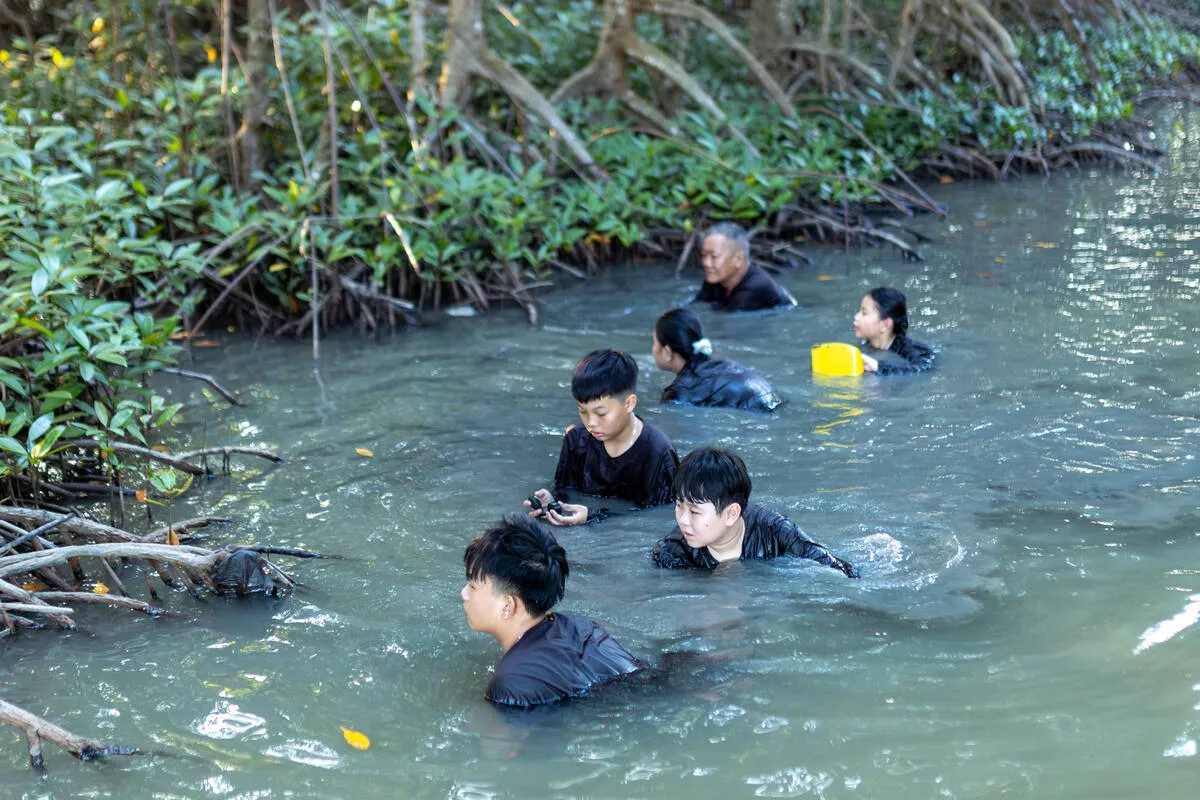
Join our local guides to explore the mangrove forests, catch mud crabs, harvest wild honey, and stay at our cozy homestay.